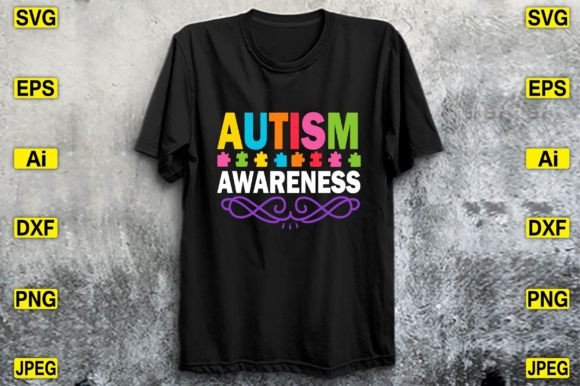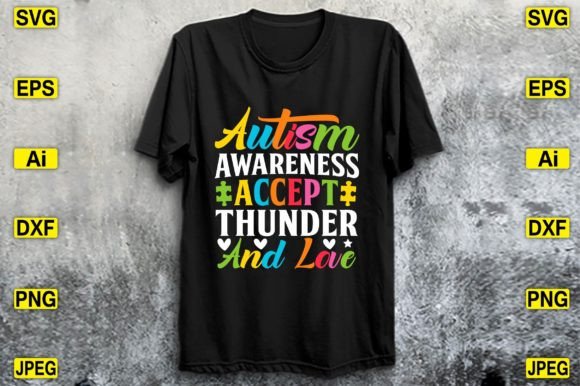
Autism Awareness Accept Thunder and Love
When I first opened the Autism Awareness Accept Thunder and Love design file, I was struck by how the layout manages to balance a bold statement with a soft, welcoming mood. The phrase itself carries weight, and the visual arrangement supports that without feeling heavy or preachy. As someone who has reviewed hundreds of design files for both digital cutting and machine embroidery, I immediately started thinking about how this would translate onto real products. Would it hold up on a toddler's onesie? Would it look crisp on a canvas tote? Could a small shop owner use it to build a cohesive autism awareness collection? After spending time with the file, testing it in several mock scenarios, and considering the practical realities of production, I have a clear picture of where this design shines and where you need to be careful.
First Impressions and Visual Personality
The design has a contemporary, slightly playful feel that avoids being overly childish or too严肃. The word "Accept" sits prominently, with "Thunder and Love" flowing naturally beside it, creating a sense of movement. The thunderbolt motif adds energy without overwhelming the message. This is not a dense, intricate file that requires a high-end machine to reproduce well. It has enough visual interest to feel custom and thoughtful, but it is clean enough for efficient production. That matters when you are making multiple items for a craft fair, a custom order batch, or a small shop restock. The mood is inclusive, warm, and quietly powerful. It feels like something a parent would proudly put on a child's backpack, a teacher would wear to school, or a small business would feature during Autism Acceptance Month.
Because the design is a digital cutting file originally intended for Cricut and Silhouette users, it translates naturally into an embroidery project with some thoughtful adaptation. The open spaces and clear letter shapes make it a strong candidate for satin stitch or a clean fill stitch, and the thunderbolt graphic offers a nice accent element that can be treated as an applique or a standalone embroidery detail. In the world of T-Shirt Designs and Graphics, this one sits comfortably in the category of meaningful, marketable content that resonates with a broad audience.
Real Project Scenario: The Custom Tote Bag
Let me walk you through a project I mentally prepped using this design. I imagined a customer requesting a set of personalized tote bags for a local autism support group. They wanted something that felt professional but not clinical, friendly but not cartoonish, and durable enough for daily use. I selected a mid-weight canvas tote in a natural cream color. For the embroidery, I visualized the main text in a deep navy blue satin stitch, and the thunderbolt accent in a bright gold or yellow. The contrast would be clean and readable even from a few feet away, which is critical for a tote bag that will be carried around a community center or used at a fundraising event.
I tested the design at a size that would fit comfortably on the front panel of the tote without crowding the edges. The lettering read clearly, and the thunderbolt added just enough visual punctuation to make the design feel complete. I could see this same layout working beautifully on a sweatshirt pocket area, on the back of a denim jacket, or centered on a pillow cover for a sensory room. The design is versatile enough to move across product categories without losing its identity. For an Etsy seller or a craft business owner, that kind of flexibility is gold. You can offer the same design across multiple product types and build a consistent aesthetic without reinventing the wheel each time.
How It Performs Across Different Product Types
In my experience, the Autism Awareness Accept Thunder and Love design performs best on medium to large flat surfaces where the layout can breathe. Custom apparel like sweatshirts, t-shirts, and hoodies are natural homes for this file. The horizontal flow of the text works well across the chest or centered on the back. For baby and kids items, scaling the design down to fit a onesie or a small tee requires checking the smallest details. The thunderbolt in particular can lose definition if reduced too much, so I recommend testing at full size first, then gradually scaling down while monitoring stitch clarity.
On tote bags, the design feels substantial and gift-worthy. On caps and hats, the curved surface presents a challenge because the layout is not naturally arched. If you are planning to embroider this on a cap, you will need to adjust the lettering to follow the curve of the front panel. It can be done, but it is not a drop-in placement. For embroidered patches, this design is excellent. The clean lines and open areas make it easy to stitch as a patch with a merrowed edge or a heat-seal backing. Patch versions of this design could be sold as standalone products or used to embellise jackets, backpacks, and aprons.
For home decor items like pillow covers, kitchen towels, or nursery blankets, the design adds a meaningful touch that customers appreciate in a personalized gift. I would advise using a lightweight stabilizer for towels and a tear-away stabilizer for pillow covers to keep the stitches crisp. The design also works well for holiday embroidery projects, especially for autism awareness events, birthday gifts, or commemorative items for families and educators.
Where to Use This Design Carefully
Not every surface is a good match for this file. Small hoop sizes, such as 4x4 hoops, will force you to shrink the design to a point where the lettering and the thunderbolt become difficult to read and stitch cleanly. If you are working with a small hoop, I recommend using only the word "Accept" or a portion of the design as an accent rather than trying to fit the entire layout. Textured fabrics like heavy fleece, boucle, or deeply ribbed knits can swallow the details, especially if you are using a fill stitch. Test on a scrap piece of the same fabric before committing to the final product.
Thin or stretchy fabrics, such as lightweight jersey or rayon blends, require careful stabilization. Without a proper cut-away stabilizer, the lettering may pucker or distort, especially around the thunderbolt shape where stitch direction changes. Dark fabric backgrounds demand high-contrast thread colors. A navy or black shirt will need a bright thread like white, gold, or electric blue to maintain readability. Conversely, light fabrics can handle softer pastel thread colors, but avoid shades that are too close to the fabric tone. The design loses its impact if the text blends into the background.
Layered garments, such as a hoodie with a front pocket or a jacket with multiple seams, require placement attention. The design should sit on a flat, stable area of the garment. Stitching over thick seams or zippers can cause needle breaks and thread tension issues. If you are manufacturing multiple items for a small shop or an Etsy store, consistency in placement is key. Mark your placement guidelines clearly and hoop each item with the same orientation.
Visual Appeal and Customer Trust
When a customer receives a product featuring the Autism Awareness Accept Thunder and Love design, the first thing they notice is the message. The second thing they notice is the quality of the stitching. If the letters are crisp, the thunderbolt is clean, and the thread colors are well chosen, the product feels professional and intentional. That builds trust. A poorly executed embroidery job on a meaningful design feels disrespectful to the message and to the customer. As a maker, you owe it to yourself and your buyers to test thoroughly before production.
This design also has strong giftability. People buy autism awareness items not just for themselves but for family members, friends, teachers, and coworkers. A beautifully embroidered sweatshirt or tote bag becomes a conversation starter and a statement of support. For small business owners, carrying this design in a product lineup signals inclusivity and community connection. It is the kind of design that can anchor a collection and attract repeat customers who appreciate thoughtful, well-made products.
From a branding perspective, the design is flexible enough to pair with a shop logo or a custom tag on the reverse side. It does not compete with additional branding elements. If you are creating a line of boutique products for a craft fair or an online shop, this design can serve as a foundation piece that you offer in multiple formats: t-shirts, totes, patches, and even printable mockups for digital previews. The design assets themselves are clean and modern, which makes them easy to showcase in product photos and social media posts.
Practical Notes for Embroidery Designers and Small Shop Owners
Before you stitch this design on any final product, I strongly recommend testing it on scrap fabric that matches your intended product material. Check the thread color contrast under both natural and artificial light. Review the stitch density: if the fill stitch areas feel too tight, the fabric may pucker. If they feel too loose, the design may look unfinished. Confirm that your hoop size can accommodate the full layout at your desired dimensions. If the design becomes distorted during stitching, adjust your stabilizer type or tension settings before trying again.
It is also wise to test the design in a black and white mockup to evaluate contrast and readability. Sometimes a design that looks vibrant on screen loses definition when stitched. Comparing light and dark fabric backgrounds in a mockup will help you choose the right combination for your product line. If you are offering this design as a digital embroidery file or as a finished product, be sure to verify the licensing terms. Some cutting files come with restrictions on commercial use, and you want to be certain that you are allowed to sell items made from this design, whether as physical goods or as digital products.
For those who are using this file as a cutting design for iron-on or heat transfer, the same principles apply. Test the weeding process, check the adhesion, and wash a sample to see how it holds up. The design's clean lines make it a strong candidate for both embroidery and vinyl applications, so you have options depending on your equipment and your customer's preferences.
Final Thoughts on the Design's Real-World Value
Autism Awareness Accept Thunder and Love is a design that earns its place in a maker's library. It is meaningful without being heavy, modern without being trendy, and versatile without being generic. Whether you are embroidering it on a custom sweatshirt for a client, stitching a batch of patches for a craft fair, or creating a line of tote bags for a local organization, this design delivers a clear message with visual warmth. As with any design file, the quality of the finished product depends on your preparation, your materials, and your attention to detail. Take the time to test, adjust, and refine. Your customers will notice the difference, and your business will benefit from the reputation for quality that comes with every well-made item.