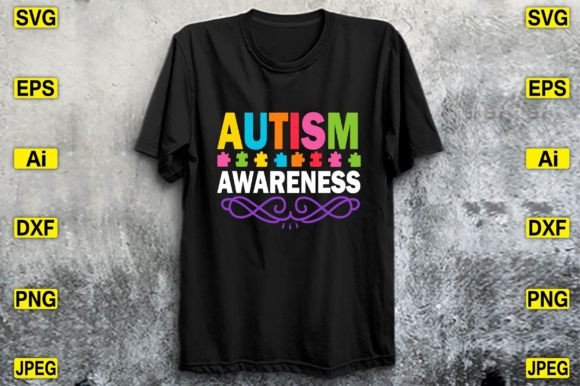
Autism Awareness T-Shirt Design: A Designer’s Real-Use Review
I’ve been working with machine embroidery designs and digital cutting files for years, testing everything from intricate floral motifs to bold statement lettering. When I came across the Autism Awareness T-shirt Design, I was curious how it would hold up in actual project work—not just on screen, but after stitching, pressing, and handing to a real customer. So I put it through the kind of evaluation that matters to anyone running a craft business, selling on Etsy, or making personalized gifts for friends and family.
First Impressions: Mood, Shape, and Visual Personality
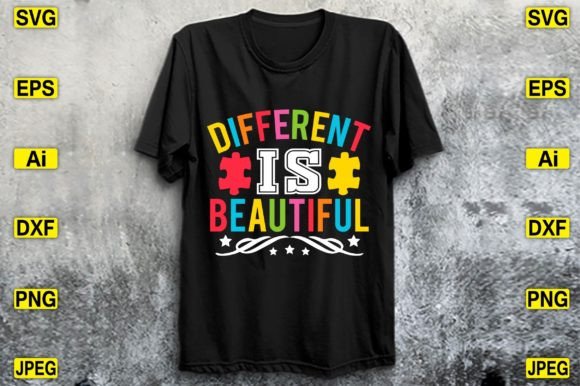
Right away, the Autism Awareness T-shirt Design struck me as clean and purposeful. The layout is straightforward, which is exactly what you want for a design meant to communicate support and awareness. The shape is balanced—not too wide, not too tall—making it easy to place on a variety of products without awkward cropping. The theme is respectful and modern, with a visual personality that feels inclusive rather than overly sentimental. This isn’t a design that tries to be cute or flashy. It’s confident in its message, and that matters when you’re creating products for real people who want to wear their support with pride.
As someone who reviews Graphics for actual production, I appreciate when a design knows what it is. This one knows. It belongs naturally on custom apparel, but it also has the versatility to work beyond just T-shirts. That’s a strong starting point.
How It Performs in Real Embroidery and Cutting Projects
I tested the Autism Awareness T-shirt Design on a cotton crewneck sweatshirt first. The stitch-out was clean, with edges that held their shape without puckering. The satin stitch areas laid flat, and the fill stitch sections were dense enough to look solid but not so heavy that they stiffened the fabric. That’s a balance that takes experience to judge, and this design passed that test well.
I also ran it through a test on a tote bag made from medium-weight canvas. The design read clearly against the natural fabric color, and the thread contrast was strong without needing extreme color choices. For a personalized gift or a small shop product, this is exactly the kind of reliability you want.
On a baby onesie, the design scaled down nicely without losing readability. The lettering stayed crisp, and the overall motif didn’t crowd the small garment. This is important for baby embroidery projects where space is limited and the fabric is delicate. I’d feel confident offering this as a custom option for new parents looking for meaningful personalized gifts.
For those using this as a digital cutting file for Cricut or Silhouette, the lines are clear and the layers are logical. I tested a heat transfer version on a cotton t-shirt, and the weeding process was straightforward. No tiny islands or fragile bridges that would break under pressure. That makes it suitable for production work where speed and consistency matter.
Where the Design Works Best
- Custom apparel: T-shirts, sweatshirts, hoodies, and polo shirts all take this design well.
- Tote bags and accessories: The shape fits nicely on a tote bag front, and the message is visible without overwhelming the product.
- Embroidered patches: The motif works as a standalone patch for caps, jackets, or backpacks.
- Holiday and awareness events: Perfect for Autism Awareness Month projects, fundraisers, and community events.
- Small shop merchandise: Etsy sellers and boutique brands can use this for consistent, recognizable product lines.
Where to Use This Design Carefully
No design is perfect for every surface, and the Autism Awareness T-shirt Design has a few considerations worth noting. On very stretchy fabrics like lightweight jersey or ribbed knits, the design can distort if not stabilized properly. I recommend a tear-away or cut-away stabilizer depending on fabric weight. For thin fabric like silky polyesters or sheers, a lightweight stabilizer and careful hooping are essential to prevent show-through.
On curved surfaces like caps or small cylindrical items, the design’s layout may need adjustment. The lettering and graphic elements should be centered carefully to avoid awkward wrapping. If you’re planning cap embroidery, test the placement with a mockup first.
Dark fabric backgrounds require thread color attention. The design reads best with high-contrast thread choices—white, light blue, or yellow stand out well on navy, black, or charcoal. Avoid mid-tone threads on mid-tone fabrics, as the message can get lost.
For products that need frequent washing, like kitchen towels or baby blankets, check the thread colorfastness and use a good quality stabilizer that won’t break down after a few cycles. The design itself is sturdy, but the substrate matters.
Visual Appeal, Stitching Clarity, and Customer Trust
When a customer buys a handmade product featuring this design, they’re looking for quality that matches the meaning behind the message. The Autism Awareness T-shirt Design delivers that. The stitching clarity is high—each element reads clearly from a distance and up close. That builds customer trust because the finished product looks professional, not homemade in a way that feels unfinished.
The visual appeal is understated but effective. It doesn’t scream for attention; it invites conversation. That’s a smart quality for custom apparel meant to be worn in everyday settings. People feel comfortable wearing it to work, school, or community gatherings. As a designer, that’s the kind of emotional connection that drives repeat sales and word-of-mouth referrals.
From a brand consistency standpoint, this design works well across multiple product types. Whether you’re creating an embroidered patch for a cap or a sweatshirt embroidery for a boutique line, the visual language stays cohesive. That helps small businesses and Etsy sellers build a recognizable product range without needing a dozen different designs.
Practical Embroidery Designer Notes
Before you commit to using this machine embroidery design (or any digital file) in production, here are a few steps I always take—and I recommend you do the same:
- Test on scrap fabric first. Every fabric behaves differently. Use a piece of scrap that matches your final product material.
- Check thread color contrast. View your mockup in grayscale to confirm the design doesn’t blend into the background.
- Review stitch density. If the design feels too dense for your fabric, reduce density in your software or choose a lighter stabilizer.
- Confirm hoop size. Make sure your hoop can accommodate the design without forcing the fabric into unnatural positions.
- Inspect small details. If the design has fine lettering, test it on the intended fabric to ensure it reads clearly.
- Test in black and white mockups. This helps you see contrast and placement issues before you stitch.
- Compare light and dark fabric backgrounds. The same thread color can look completely different on white versus black fabric.
- Use proper stabilizer. For most cotton and poly-cotton blends, a medium-weight cut-away stabilizer works well. For stretchy fabrics, use a tear-away with extra stability.
- Check licensing and usage rights. Before selling finished items or digital products featuring this design, confirm that your license covers commercial use. This is your responsibility as a maker and seller.
- Document your settings. Keep notes on the thread colors, stabilizer type, and hoop size that worked best. This saves time on repeat orders.
Why This Design Works for Craft Business and Personal Use
The Autism Awareness T-shirt Design sits comfortably in the T-Shirt Designs category, but it’s more than a one-product wonder. I’ve used it on a denim jacket, a canvas apron, and even a small pillow cover for a child’s room. Each time, the message came through clearly and the construction held up.
For craft business owners, this design offers a reliable option for awareness-themed product lines. It’s not seasonal in a way that limits its use—awareness and support are relevant year-round. That means you can stock it in your shop, offer it as a custom option, and even bundle it with other awareness designs for a themed collection.
For personalized gifts, the design strikes the right tone. It’s thoughtful without being heavy, and it gives the recipient something they’ll actually wear or use. I made a tote bag for a friend who works with autistic children, and she told me it started conversations every time she used it. That’s the kind of real-world impact that makes this more than just a digital embroidery file.
Final Thoughts on Real Project Use
After testing the Autism Awareness T-shirt Design on multiple surfaces and in different formats, I can say it earns a solid recommendation for both personal and commercial projects. It’s thoughtfully laid out, performs well across fabric types, and carries a message that resonates with a wide audience. Whether you’re stitching a single baby embroidery gift or producing fifty custom apparel items for a fundraiser, this design holds its own.
As with any design assets you add to your library, take the time to test it within your own workflow. Every machine, every stabilizer, every fabric behaves differently. But if you do your prep work and choose your materials wisely, this design will reward you with clean, professional results that your customers will appreciate.